

The Hormonal Context
For decades, exercise science was built almost entirely on the male body. Women were frequently excluded from research, especially when hormones entered the conversation. Only recently have we begun to understand that women don’t respond to training the same way men do — and nowhere is this more evident than during perimenopause and menopause.
This transition affects far more than reproductive function. Fluctuations in estrogen and progesterone can influence sleep, recovery, mood, memory, coordination, joint stability, breathing patterns, and overall energy levels.
As Pilates Instructors We See This Everyday
Clients who were once energetic suddenly arrive exhausted. Women who have practiced the same sequence for years begin forgetting exercises mid-class. Some experience palpitations, dizziness, joint pain, anxiety, insomnia, or crushing fatigue. Then the following week, they’re back feeling strong and full of energy again.
For a long time, I thought these fluctuations were simply part of aging. But when I began experiencing them in my own body — muscle loss, slower recovery, lower energy levels — I realized something more was going on. That’s when I started studying female physiology more deeply and observing my clients differently. And it completely changed the way I teach.
Adapting Classical Pilates, Without Losing Contrology
There’s growing research today on menopause and strength training, but still very little on adapting Classical Pilates during this life stage — particularly within the traditional Contrology structure, with its specific exercise order and progression. Even so, adaptation doesn’t mean compromising the method.
In practice, I’ve learned that observing symptoms and energy levels on any given day is often more important than trying to strictly follow a menstrual calendar — especially during perimenopause, when cycles become unpredictable.
Some days a woman simply doesn’t have enough energy for a full, intense Reformer session. In those moments, there’s no need to cancel the class or avoid the apparatus altogether. The key is adjusting the physical demand.
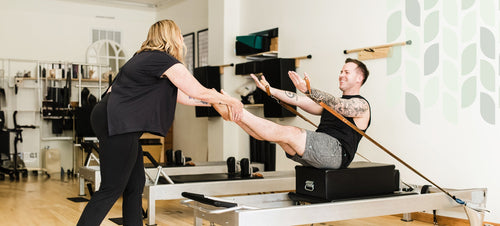
I usually begin with Footwork, Hundred, and Coordination, then continue with parts of the Long Box series. From there, I constantly watch how she responds to the effort and how far she can comfortably go. Many sessions end naturally with Running.
Highly demanding exercises like Knees Off can become excessive during certain hormonal phases. These movements require strong leg drive and elevated breathing. Some women experience dizziness, discomfort, or overwhelming fatigue on those days — particularly when hormonal fluctuations are most intense. In those moments, dialing back the intensity isn’t weakness. It’s smart programming.
I’ve also become far more attentive to joint stability. As estrogen declines, increased ligament laxity and reduced joint support become common. Because of this, wide-range movements like Leg Circles, Arm Circles, Big Bends, or Splits often require modification. Sometimes reducing the range of motion is enough; other times, it’s simply better to leave those exercises for another week.
The Magic Circle has become a particularly valuable tool during this phase. It allows us to work on control, deep musculature, and breathing without placing excessive stress on the joints. It also helps strengthen the pelvic floor, which is often affected by hormonal changes during perimenopause and menopause.
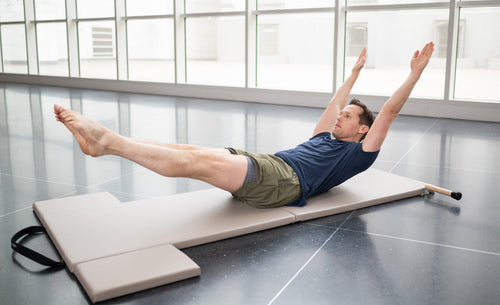
On low-energy days, I also draw from the early Mat repertoire, Push Through, or work with the Breathing Bar on the Cadillac or Tower. There are so many possibilities within the method itself — without making a client feel she has somehow “failed” because she couldn’t get through an intense workout.
Building Support and Connection
But then there are the other days.
Days when a client walks in feeling strong, rested, and energized. And I believe we should take full advantage of those moments. Those are the ideal days for a more athletic Reformer session, more powerful Cadillac work, or even Pumps on the Electric Chair.
Many women at this stage of life are constantly told they should become smaller, slower, more fragile. In my experience, many of them actually need the opposite: to feel strong again.
That may be the most important lesson menopause has taught me as an instructor. Not every class needs to feel the same. Not every body will respond the same way each week. Listening, observing, and adapting have become just as important as teaching the exercises themselves.
And perhaps that’s exactly where Pilates can make the greatest difference during this stage of life. As women — instructors and students of the method alike — what we may need most during this phase isn’t perfection. It’s support. Menopause can feel profoundly isolating, especially when so many women go through it in silence, believing they simply have to push through the exhaustion, the discomfort, the change.
The studio can become something far more meaningful than a place to exercise. It can become a space where women feel seen, understood, and respected in the reality of what their bodies are going through.
I genuinely hope that more women — instructors, teachers, trainers, and dedicated Pilates practitioners — continue exploring this topic together, with curiosity, openness, and compassion. The more we share our experiences and observations, the better we can support one another through a transition that every woman will eventually face.
Perhaps that, too, is part of the true spirit of Contrology: learning to work with the body, not against it.

Chris Pinheiro
Chris Pinheiro is a physical education teacher with extensive experience in movement and has spent the last 11 years teaching Classical Pilates. She currently teaches at her home studio in Lisbon, Portugal.