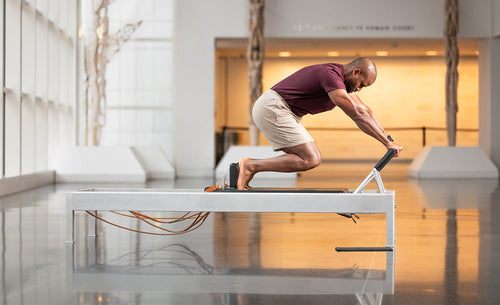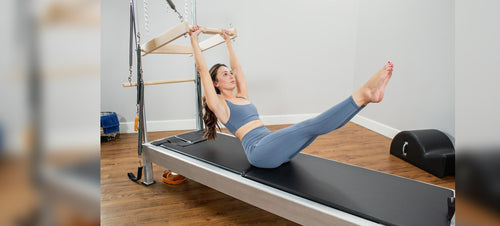


There are no “basic” exercises in Contrology. No Level 1. No such thing as “Reformer Pilates.” And no rigid rules of engagement.
What exists instead is a beautifully structured, hierarchical system—grounded in science and guided by a philosophy of living, artistry, and the unity of mind, body, and spirit—created by the genius Joseph Pilates.
Within this system lives a family of apparatus (as my teacher Inelia Garcia so perfectly describes it), each piece working in synergy with the others to develop the body and mind, and elevate the spirit. Some movements are less complex, others more demanding—but all are purposeful, and all have a specific intent.
Understanding the system is the pathway to building the body correctly. Only once that understanding is established can we begin to thoughtfully organize and plan sessions that truly serve the individual in front of us. As Romana Kryzanowska famously said, “Teach the body in front of you.” Simple in theory—far more nuanced in practice.
Let’s look at a concrete example: progressing a client to the Push Down on the Wunda Chair.
Before a student is ready, they need to develop several key abilities:
- Control of the wrists, arms, and shoulders, along with strength and stability in the shoulder girdle
- Sufficient mobility to flex forward with control
- Knee stability to avoid hyperextension
- Comfort with the head positioned lower than the shoulders
- A working understanding of the lower core—the “Powerhouse”
- The ability to listen, process, and respond to instruction while in position
It sounds like a lot—because it is.
But it’s also entirely logical.
Spinal flexion
The student should be able to perform a Roll Down and Roll Up on the Cadillac (bent knees are fine), using the bar or working from the mat as needed.
Shoulder girdle strength and control
Incline push-ups help build foundational strength in the hands and arms. Pre-Pilates work for the wrists—using weights, poles, or even the fingers—is essential. The Magic Circle can support awareness of arm alignment, elbow control, and connection to the Powerhouse.
Legs and knees
Reformer footwork teaches knee tracking and control. Exercises like 2x4 work help strengthen the knees and feet.
Head-down positioning
The Elephant on the Reformer introduces the experience of the head lowering below the shoulders. Wall Roll Downs and Roll Ups further develop control and sequencing back to standing.
Listening skills
These are cultivated over time. If a student rushes ahead or loses focus, bring them back with changes in tone, rhythm, or simplified cues.
When these elements are thoughtfully developed across sessions, the transition to the Wunda Chair becomes not only achievable, but successful and rewarding.
Every piece of apparatus has its role within the family. Every exercise has meaning within the hierarchy of the system. There is a natural flow through space and time—beginning deliberately, then building momentum as the body becomes capable of receiving more.
As teachers of Contrology, our work is to deeply understand each “family member”: its purpose, its limitations, its challenges, and its potential. That is where the magic lives.
As Inelia Garcia often reminds me, our responsibility is to use both intelligence and creativity to design sessions that support the student—moment by moment—so they can succeed in every phase of their lesson.
To teach Contrology is a privilege. We have the opportunity to change lives and help people feel better in their bodies every day. But with that comes responsibility: to understand the whole system and how it all works together to build a body, mind and spirit safely and effectively - and, of course, teach with grace and love.

Vivian Piccone Jung
Owner, Authentic Pilates
Vivian is the founder/owner of the Authentic Pilates studios in New York with two Manhattan locations and one Long Island studio. Her beautiful Midtown studio is the US training center for Inelia Garcia Authentic Pilates.
Vivian teaches workshops and workout classes for teachers of all certifications online and in-person weekly. She is passionate about maintaining the legacy of the Authentic Pilates Method.
Vivian’s mission is to uplift all Pilates teachers and build strength in body, mind and spirit of all those she encounters for a better human race.
Instagram @authenticpilatesnyc
Website www.pilatesnyc.com
email: hello@pilatesnyc.com